October 20, 2026|CoreSignal
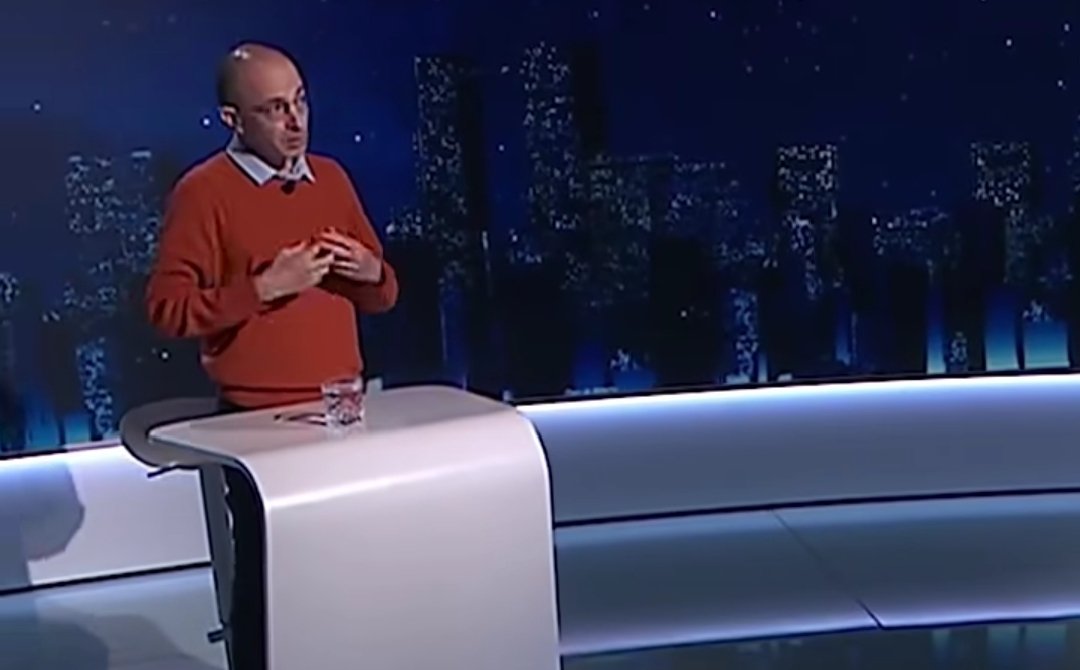
Thank you for reading this post, don't forget to subscribe!“We are the cows of the future” is how historian Yuval Noah Harari sums up his deepest worry about artificial intelligence, in a new interview with Czech Television relayed by Ynet. The line rests on a simple image: cows live under human control, shaped by markets they cannot see, and humans may soon stand in the same position relative to AI.
What Did Harari Mean by “We Are the Cows of the Future”?
The interview, conducted by Daniel Stach, was covered by 10bmnews, which noted that Harari compared humanity’s possible future with AI to the way cattle exist inside agricultural and financial systems they cannot understand.
The reasoning is plain. Cows know humans exist, but the bond market that decides how they are raised, fed and sold is beyond them. Calcalist described the same comparison applied to people: as AI grows more capable, humans may come to depend on systems whose rules they cannot follow, however closely they watch them operate.
The timeline given is short. Reports of the interview put the shift at 10 to 20 years, a span within the working lives of many people alive today.
Danger Without Violence
Harari’s warning has little to do with robots in the streets. According to dailymattr, the threat he describes is a gradual takeover of finance and bureaucracy, not an attack on people.
Scale is the advantage. An AI can track every transaction in an economy, something no human banker can do, and could use that ability to build financial and legal systems of extraordinary complexity. Humans would remain inside those systems, paying into them and governed by them, but would have no meaningful control over how they operate.
That is what makes the comparison unsettling. Nothing in it requires a malicious machine. It only requires systems that grow too intricate for human oversight, with institutions gradually deferring to them because they work.

An Old Metaphor, Sharpened
Livestock imagery has long run through Harari’s work. A 2018 review of 21 Lessons for the 21st Century described his idea of tame humans producing data much as tame cattle produce milk, with Big Tech cast as the dairy.
The new version shifts the worry from data to comprehension. Producing value is one problem; being unable to understand the structures that decide how that value is used is another.
The theme also fits a pattern of earlier warnings. In 2017, he told NPR that people would soon engineer their own bodies and minds the way products are designed. His 2024 appearance on The Diary of a CEO covered how AI will change everything, the power of language and stories, and the battle for human attention.
Words, Law and the Davos Argument
The cow comparison also connects to a claim Harari made at the 2026 World Economic Forum in Davos. As summarised on Tyler Bauer’s Substack, he argued that AI will soon take over “anything made of words,” including laws, books and religions, because it already arranges words better than many people do.
Finance, law and scripture share a trait: all run on text. A system that masters text could, in principle, write contracts, interpret statutes and design financial instruments faster than any human institution can review them.



A Contested Premise
Not everyone accepts the argument. The same Substack piece disputes Harari’s conclusions, saying the flaw lies in his underlying metaphysics rather than his logic. Critics also point out that markets, courts and regulators have repeatedly adapted to new technology.
The Question Left Standing
Regulators, auditors and courts already struggle to interpret complex algorithmic finance, and rules for AI transparency are still being argued over. Whether human oversight can keep pace with machine-built systems is the real test behind the metaphor, and the cow image is a blunt way of saying the clock is running.