
Because your eyes blink 60% less when you’re staring at a screen — here’s how to fight back
Thank you for reading this post, don't forget to subscribe!September 18, 2026|CoreSignal
Why Your Eyes Feel Tired After a Screen-Heavy Day
If prolonged screen use leaves your eyes feeling dry or irritated, the Top 10 Eye Drops for Computer & Mobile Screen Users below feature lubricating artificial tears that may help relieve these symptoms.
When you’re focused on a computer or mobile screen, you tend to blink less often. Some studies suggest that screen use can reduce the blink rate by as much as 60%. Because blinking helps spread the tear film that keeps the eyes lubricated, fewer blinks can cause the tears to evaporate more quickly. The result can be familiar symptoms of Digital Eye Strain (Computer Vision Syndrome), such as dryness, burning, grittiness, redness, and tired, uncomfortable eyes.
For many people, a good pair of glasses isn’t the only thing they need after hours of screen time—sometimes the eyes simply need additional moisture. That’s where lubricating artificial tears can help.
It’s also important to remember that not every type of eye discomfort is caused by dryness. If you experience frequent headaches, squinting, persistent blurred vision, or difficulty focusing, the problem could be related to your vision or screen setup. In those cases, eye drops may provide little benefit, and an eye examination may be more appropriate.
How to Choose the Right Type
- Preservative-free drops — best if you need to use drops more than 3–4 times a day, since preservatives can cause irritation with frequent use
- Hyaluronic acid (HA) based drops — offer longer-lasting hydration for gritty, tired eyes
- Lipid-based drops — help when dryness is caused by tears evaporating too quickly (evaporative dry eye)
- Contact-lens-friendly formulas — check the label if you wear lenses; not all drops are lens-safe
The Top 10
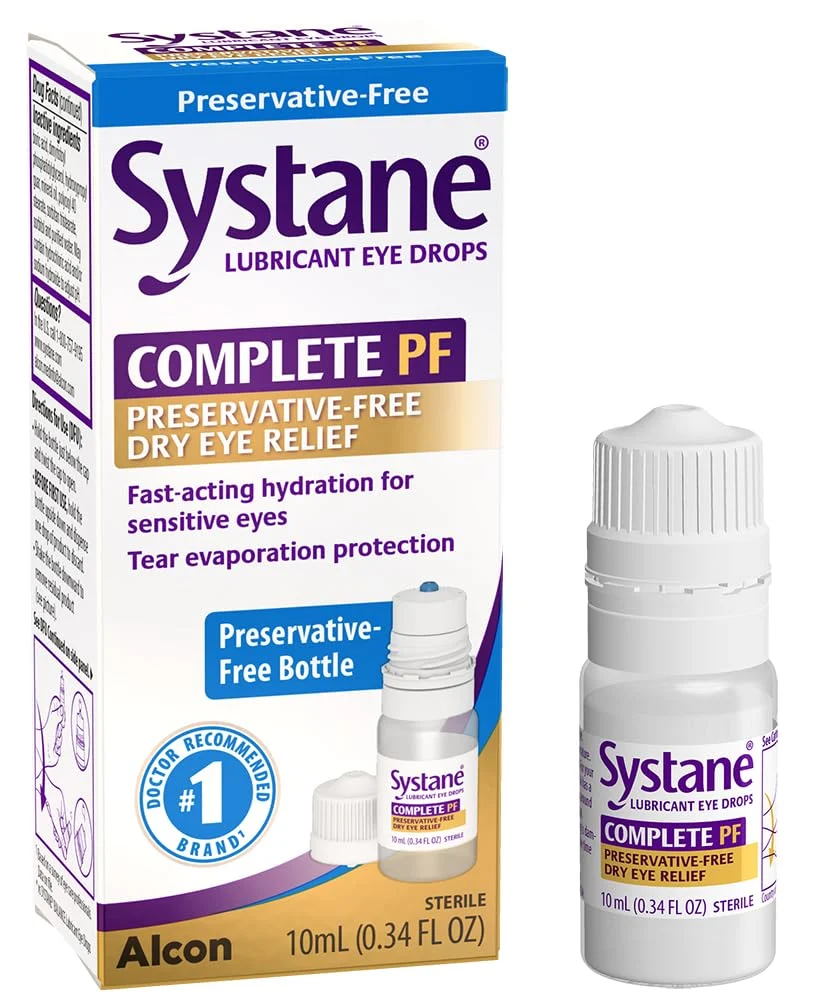
1. Systane Complete Preservative-Free
A widely recommended, preservative-free lubricant that suits frequent daily use for people doing long screen sessions without irritation buildup.
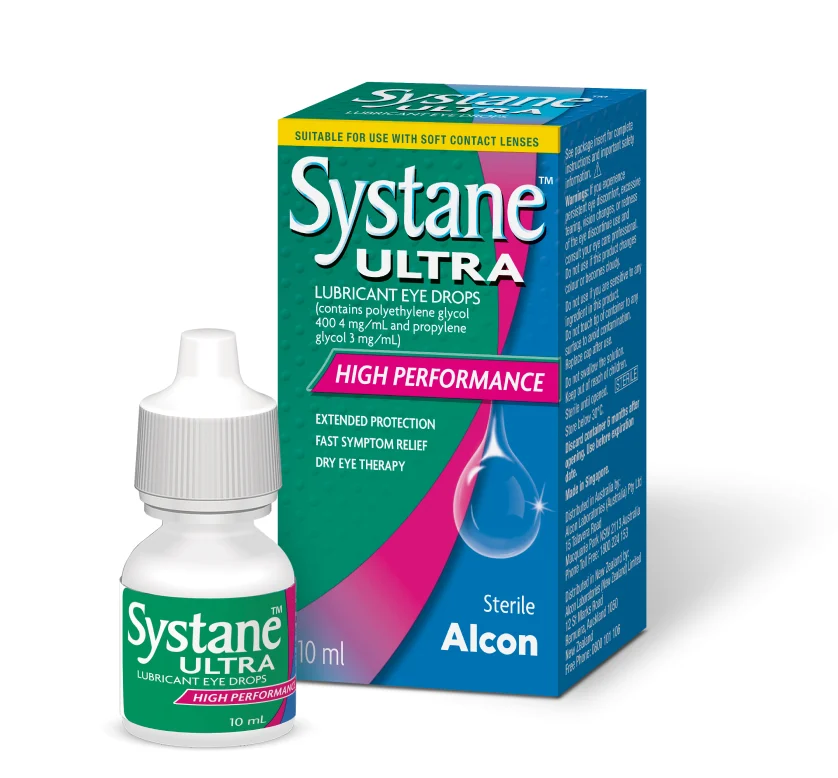
2. Systane Ultra
A popular, longer-lasting lubricant option for moderate to frequent dryness; a solid everyday pick for office and remote workers.
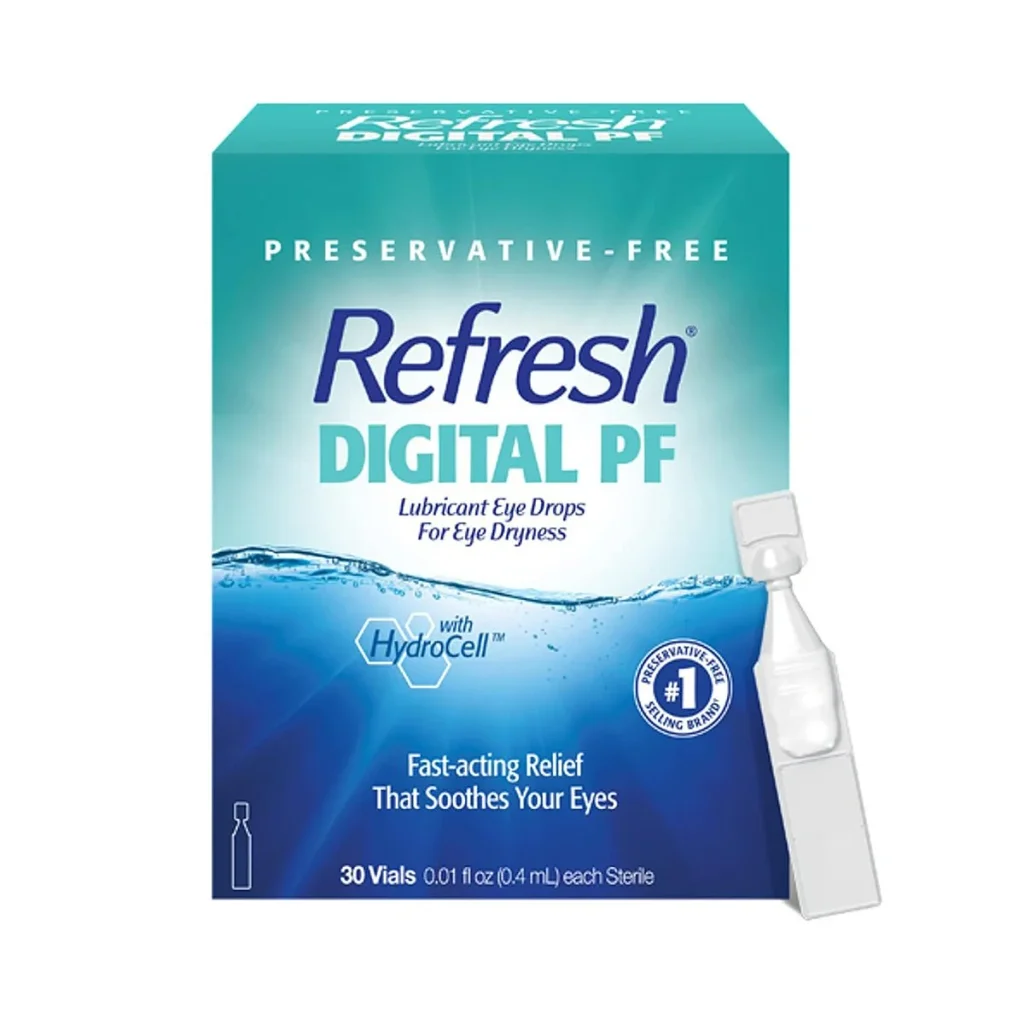
3. Refresh Digital PF
Formulated specifically for dryness tied to prolonged screen use. Being preservative-free, it’s designed for use during or right after long digital sessions without blurring vision.
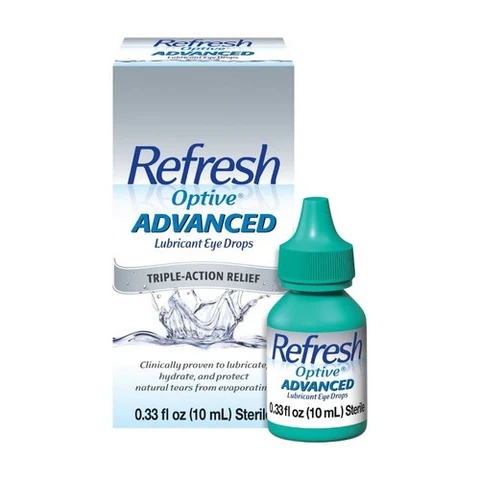
4. Refresh Optive Advanced
A stronger option often recommended for more pronounced dryness, going a step beyond basic artificial tears.
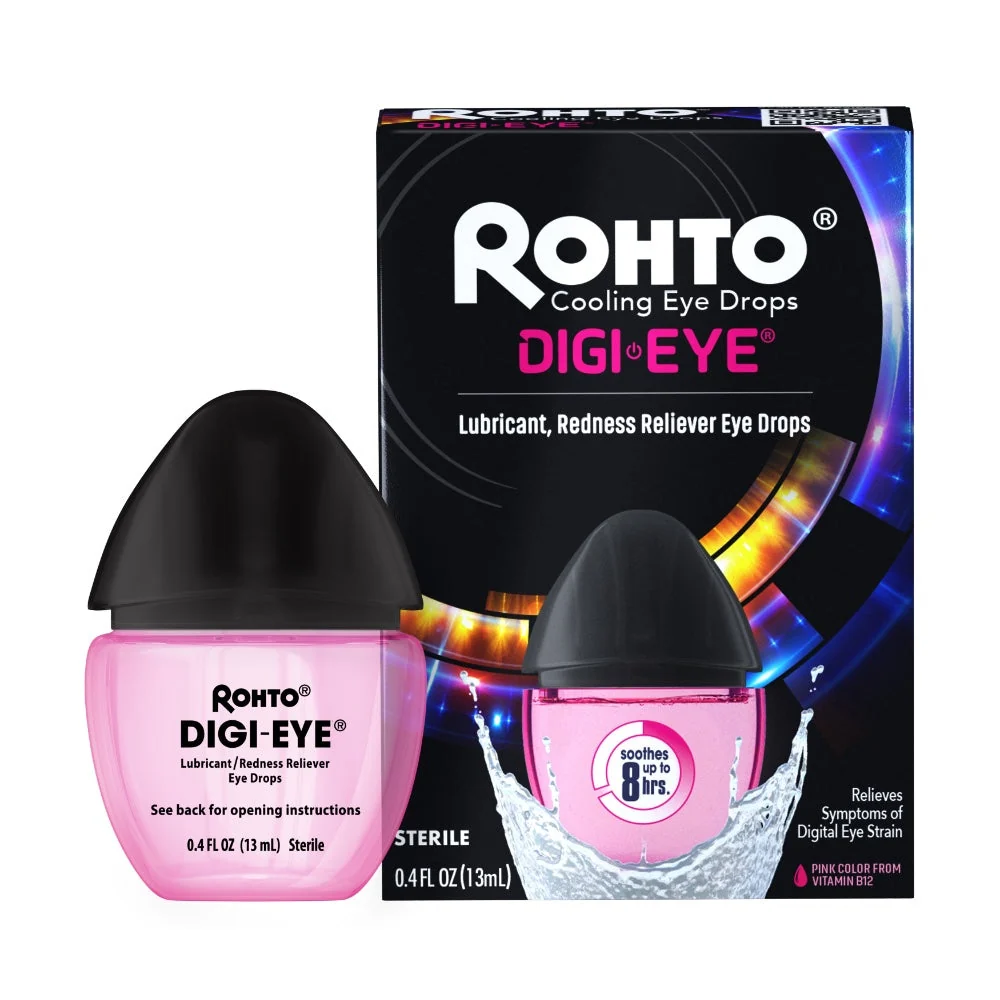
5. Rohto Digi-Eye Digital Eye Strain Drops
Specifically marketed for digital eye strain, combining lubrication with a cooling sensation and up to 8 hours of soothing relief. Contains a mild redness-reliever ingredient, so it’s best for occasional rather than all-day, everyday use.
6. Thealoz Duo
A preservative-free option that uses a dual-hydration formula, popular for moderate-to-severe dry eye relief without the irritation risk of preservatives.



7. Optase Comfort
A gentle lubricating option often recommended for general screen-related dryness and day-to-day comfort.
8. Hycosan Extra
A preservative-free drop designed for more intense dryness, suitable for frequent use throughout a heavy screen day.
9. TheraTears
Known for closely mimicking the natural composition of human tears, making it a solid choice for consistent, gentle daily relief.
10. GenTeal Gel Drops
A slightly thicker, gel-based formula that provides longer-lasting lubrication — often preferred for use before bed after a long day of screen time, since the thicker texture can briefly blur vision right after application.
A Few Important Cautions
- Avoid daily reliance on redness-reliever drops (like decongestant/vasoconstrictor-based ones) for more than a few days at a time — overuse can cause “rebound redness,” where your eyes get redder once the drops wear off.
- Preservative-free is safer for frequent use. If you’re using drops more than 4 times a day regularly, switch to a preservative-free formula.
- Drops aren’t a fix for everything. If your discomfort includes headaches, blurry vision, or eye pain rather than just dryness, it may be linked to screen distance, poor lighting, or an uncorrected vision issue — not something eye drops alone will solve.
- See an eye doctor if symptoms persist. If you find yourself needing drops constantly despite following screen-break habits, it could indicate an underlying dry eye condition, allergy, or contact lens issue that needs proper diagnosis.
Bonus Tip: The 20-20-20 Rule
Alongside eye drops, try the 20-20-20 rule: every 20 minutes, look at something roughly 20 feet away for at least 20 seconds. This simple habit helps reset your blink rate and reduce eye fatigue, and works well alongside — not instead of — good lubricating drops.
This article is for general informational purposes and reflects publicly available product information as of September 2026. It is not a substitute for professional medical advice. Product availability may vary by country and pharmacy — consult a pharmacist or eye doctor before starting any new eye drop, especially if you wear contact lenses, are pregnant, or have an existing eye condition.