ITBP Director General Shatrujeet Kapur says standoffs with PLA troops are under way at several points along the Arunachal frontier, with the Asaphila sector in Upper Subansiri among the most closely watched.
Thank you for reading this post, don't forget to subscribe!October 25, 2026|CoreSignal
For months, the India-China face-off in Arunachal Pradesh was discussed mostly through unnamed officials and local accounts. That changed this week, when the head of the force that guards the frontier acknowledged it in public.
Indo-Tibetan Border Police (ITBP) Director General Shatrujeet Kapur made the remarks on Thursday, October 22, at the Himveer Samman Samaroh, the force’s annual ceremony to honour its personnel, held at the Central Training College in Alwar, Rajasthan. The event came two days before the ITBP’s 65th Raising Day.
ITBP Chief Kapur Flags Ageing Weapons Amid the India-China Face-Off in Arunachal Pradesh
Kapur told the gathering that face-offs had happened at several locations in Arunachal Pradesh and that the situation was still continuing, The Wire reported. He credited the newly raised Shaurya commandos with playing an exemplary role and said a full battalion of the unit, built for high-altitude mountain fighting, will soon be in place. Business Today added that he called China India’s “biggest adversary” and that the standoff points have been active since July.
The ITBP has about 95,000 personnel, Kapur said. The force was raised as a mountain guerrilla outfit and took on border-guarding duty along the China frontier in 2004. It now holds the first line along the 3,488-km Line of Actual Control (LAC), with the Army positioned behind it.
Asaphila, where the tents went up
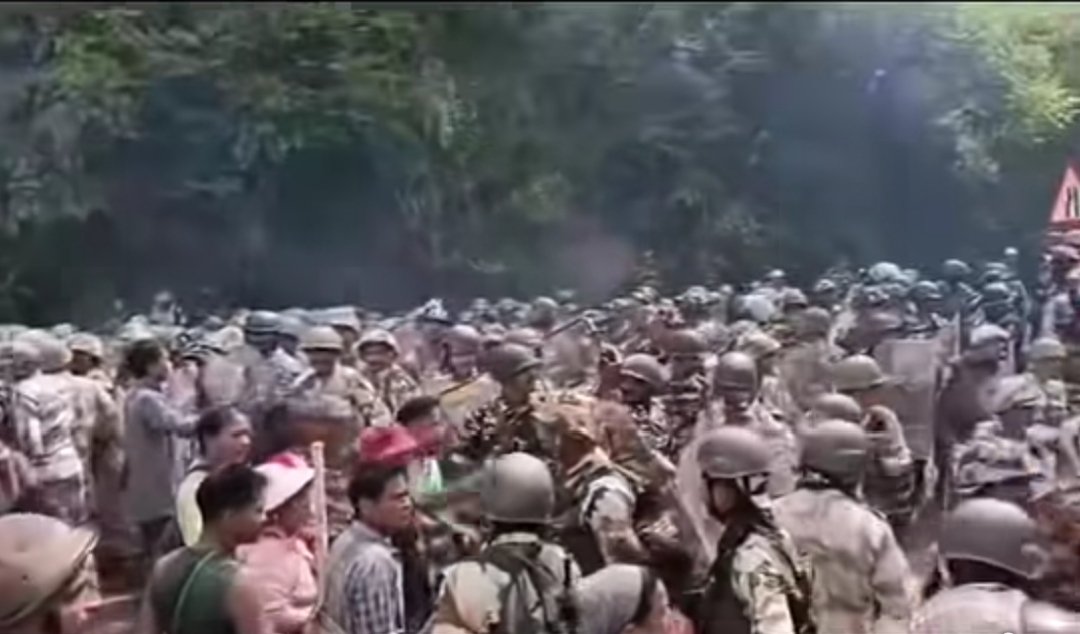
Government sources quoted in the same report identified Asaphila, near Taksing in Upper Subansiri district, as the most prominent flashpoint since late July. As described there, patrols met face to face near the Maja company operating base during routine patrolling, and both sides pulled back after a brief confrontation. Chinese troops are said to have returned days later in greater strength and pitched tents on higher ground, around 6–7 km inside what India regards as its side of the LAC.
India has since strengthened its deployment in the area. A report in the Telegraph, summarised by NewsBytes in late August, had already described the ITBP setting up additional border outposts and moving more troops into vulnerable zones after an increase in Chinese troop numbers in the eastern sector.
Not the first time in Arunachal
Friction along Arunachal’s 1,129-km boundary with Tibet is not new. In December 2022, Indian and Chinese troops clashed near Yangtse in the Tawang sector, and both sides reported injuries before disengaging. An ITBP internal report in 2024 flagged 19 vulnerable points between Ladakh and Arunachal where Chinese transgression was considered possible. What sets the current episode apart is that a serving force chief has now confirmed multiple simultaneous encounters, and that some remain unresolved.
Talks held, friction continued
Contact between the two sides did not stop while the standoff built up:
- August 6: 36th meeting of the Working Mechanism for Consultation and Coordination on India-China Border Affairs
- August 26: NSA Ajit Doval attended the 25th round of Special Representatives’ talks in Beijing
- September 6: first Corps Commander-level meeting in the Eastern Sector, at the Vacha-Damai Border Personnel Meeting Point in Arunachal Pradesh
- September 11–13: Chinese President Xi Jinping took part in the BRICS Summit hosted by India
Meetings of this kind have mostly been held at Chushul-Moldo in eastern Ladakh, especially since the Galwan clashes of June 2020, which makes the Arunachal venue notable.
Drones, bunkers and an ageing arsenal
Kapur was candid about the force’s equipment. He said ITBP weapons are around 50 years old and argued that conventional methods alone may not be enough against a China that has invested heavily in arms and infrastructure. He pointed to drones and counter-drone systems as the answer: 70 per cent of a Rs 400 crore modernisation fund went to drones, and a further Rs 1,000 crore from a Rs 3,500–4,000 crore scheme is earmarked for the same purpose. Every border-guarding battalion now has a drone platoon, pilots are being trained, and some drones are being built in-house.


Reinforced underground shelters and bunkers are also being built along the frontline to protect troops from heavy artillery, aerial attack and harsh weather. Strike training across units is expected to be completed before late 2027, Business Today reported.
Reactions from Delhi
Congress general secretary Jairam Ramesh used the remarks to attack the government, describing the Prime Minister’s silence on the Arunachal face-offs as “deafening”. He also cited reports of lost patrolling points, China’s renaming of places in Arunachal Pradesh, and India’s record $112 billion trade deficit with China in 2025–26.
At his weekly briefing on Friday, Ministry of External Affairs spokesperson Randhir Jaiswal said the border areas get disturbed from time to time when Chinese forces diverge from established patrolling patterns. He referred specifics to the Ministry of Defence and said both sides continue to use diplomatic and military channels to avoid misunderstanding and miscalculation along the LAC.
No Chinese response to the ITBP chief’s statement appeared in the reports reviewed for this article. With some standoffs still unresolved, the next round of military talks is likely to decide how the India-China face-off in Arunachal Pradesh plays out through the winter.
Disclaimer: This article is based on media reports and statements available as of October 24, 2026. Details of the standoffs, including locations and troop positions, come largely from government sources quoted in news reports and have not been independently verified by CoreSignal. Readers are advised to follow official updates from the Ministry of Defence, the Ministry of External Affairs and the ITBP. For corrections or queries, contact ask@coresignal.in.