Kolkata, July 6, 2026|CoreSignal
Thank you for reading this post, don't forget to subscribe!First State Public Holiday for Shyama Prasad Mukherjee
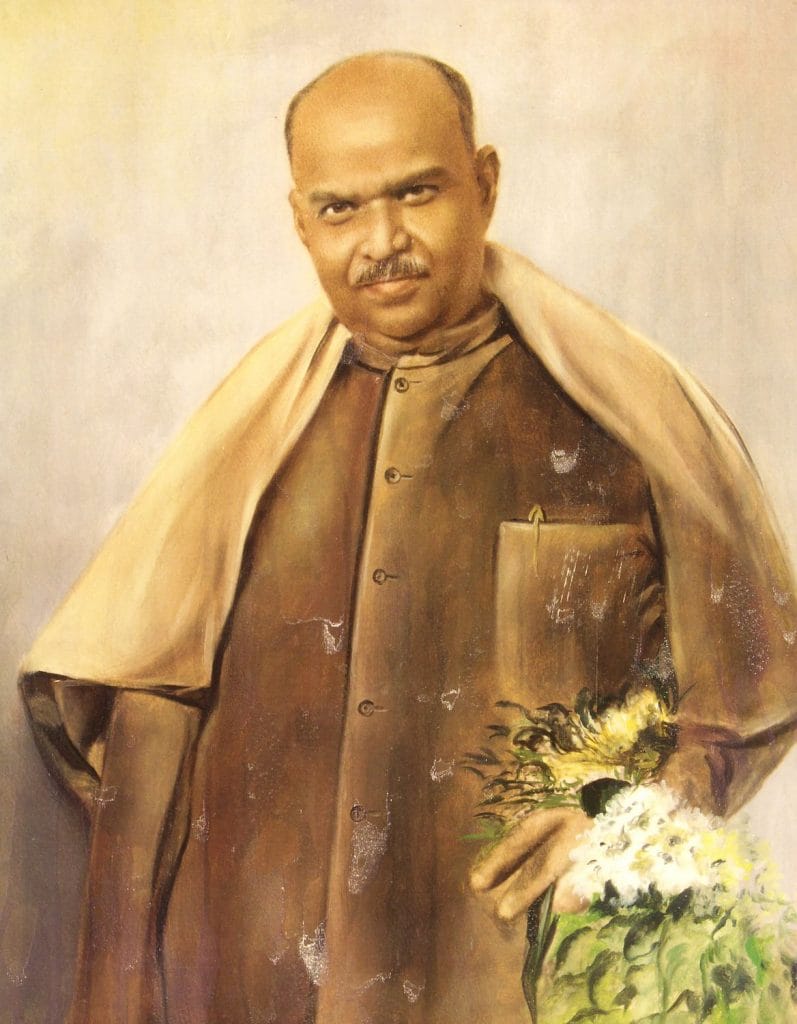
West Bengal on Sunday observed its first ever state public holiday to commemorate the 125th birth anniversary of Dr. Shyama Prasad Mukherjee, marking the first time any state government has officially declared his birth anniversary as an annual public holiday. The decision, announced by the West Bengal government, applies to state government offices, educational institutions, urban and rural local bodies, and state-run organisations.
While the holiday marks a significant official recognition of Mukherjee’s public life, it has also renewed debate over the legacy of one of India’s most politically contested post-Independence leaders.
Shyama Prasad Mukherjee: A Scholar Who Entered Politics
Born on July 6, 1901, in Calcutta (now Kolkata), Shyama Prasad Mukherjee belonged to a distinguished Bengali family. His father, Sir Ashutosh Mukherjee, was one of Bengal’s most respected educationists and served as Vice-Chancellor of the University of Calcutta.
Following an outstanding academic career, Mukherjee became the youngest Vice-Chancellor of the University of Calcutta at the age of 33. He later entered politics and served in the Bengal Legislative Council before Independence.
After India gained Independence in 1947, Prime Minister Jawaharlal Nehru appointed him as India’s first Minister for Industry and Supply. However, ideological differences with the Nehru government, particularly over the Nehru–Liaquat Pact, led to his resignation from the Union Cabinet in 1950.
Founder of the Jana Sangh, the BJP’s Political Predecessor
In 1951, Mukherjee founded the Bharatiya Jana Sangh with the support of the Rashtriya Swayamsevak Sangh (RSS).
Although he did not found the Bharatiya Janata Party (BJP), the Jana Sangh is recognised as the BJP’s political predecessor. After the Jana Sangh merged into the Janata Party in 1977, former Jana Sangh leaders established the BJP in 1980.
Why His Legacy Remains Contested
Unlike many leaders of the Independence era, Mukherjee’s political career continues to attract sharply differing assessments.
Opposition to the Quit India Movement
One of the most frequently cited criticisms relates to his position during the Quit India Movement of 1942.
At the time, Mukherjee was serving in the Bengal government. Historical records show that he wrote to the Governor of Bengal about maintaining administration and preventing the Congress-led movement from disrupting governance. Critics argue that this reflected cooperation with the British colonial administration during a crucial phase of India’s freedom struggle. Supporters, however, maintain that his actions reflected his constitutional approach to governance rather than support for British rule.
Association with the Hindu Mahasabha
Mukherjee also served as the president of the Hindu Mahasabha, an organisation that advocated Hindu political interests during the final years of British rule.
Historians remain divided over its historical role. Critics argue that the organisation’s politics contributed to communal polarisation during the 1940s, while supporters contend that it represented the concerns of sections of the Hindu community amid growing communal tensions before Partition.
Partition of Bengal
Mukherjee strongly supported the partition of Bengal in 1947, arguing that Hindu-majority districts should remain within India instead of becoming part of Pakistan.
Also Read
Supporters credit this campaign with ensuring the creation of present-day West Bengal within the Indian Union. Critics, however, argue that it reinforced communal divisions during an already volatile period.
Jammu and Kashmir
Mukherjee is also remembered for opposing the special constitutional status then enjoyed by Jammu and Kashmir.
In 1953, he entered the state without the required permit as part of a political campaign, was arrested, and later died in custody on 23 June 1953. The circumstances surrounding his death have remained the subject of political discussion and public interest for decades.
A Historic First for West Bengal
The West Bengal government’s decision to observe July 6 as an annual state public holiday is historically significant because no previous state government had declared Mukherjee’s birth anniversary an official recurring public holiday.
The move comes during his 125th birth anniversary year and reflects a significant shift in the state’s official recognition of his legacy.
Legacy Beyond Politics
More than seven decades after his death, Shyama Prasad Mukherjee continues to occupy a unique place in India’s political history.
To supporters, he was an accomplished educationist, former Union minister and the founder of the Bharatiya Jana Sangh, the political movement that eventually gave rise to the BJP. To critics, his positions during the Quit India Movement, his leadership of the Hindu Mahasabha and his role in the politics surrounding Partition remain subjects of continuing debate.
With West Bengal officially observing his birth anniversary as a state public holiday for the first time, those contrasting interpretations of his life and politics are once again at the centre of public discussion.