A 25-year-old graduate from Darbhanga, 75 litres of branded liquor, and a family with liquor cases of its own — inside the Samastipur train seizure that’s now a full-blown network probe
Thank you for reading this post, don't forget to subscribe!September 8, 2026|CoreSignal
A liquor seizure aboard the Swatantrata Senani Express has opened questions about a suspected smuggling network, its buyers and the family connections investigators are now examining.
The woman in Coupe Seven was at the centre of it all.
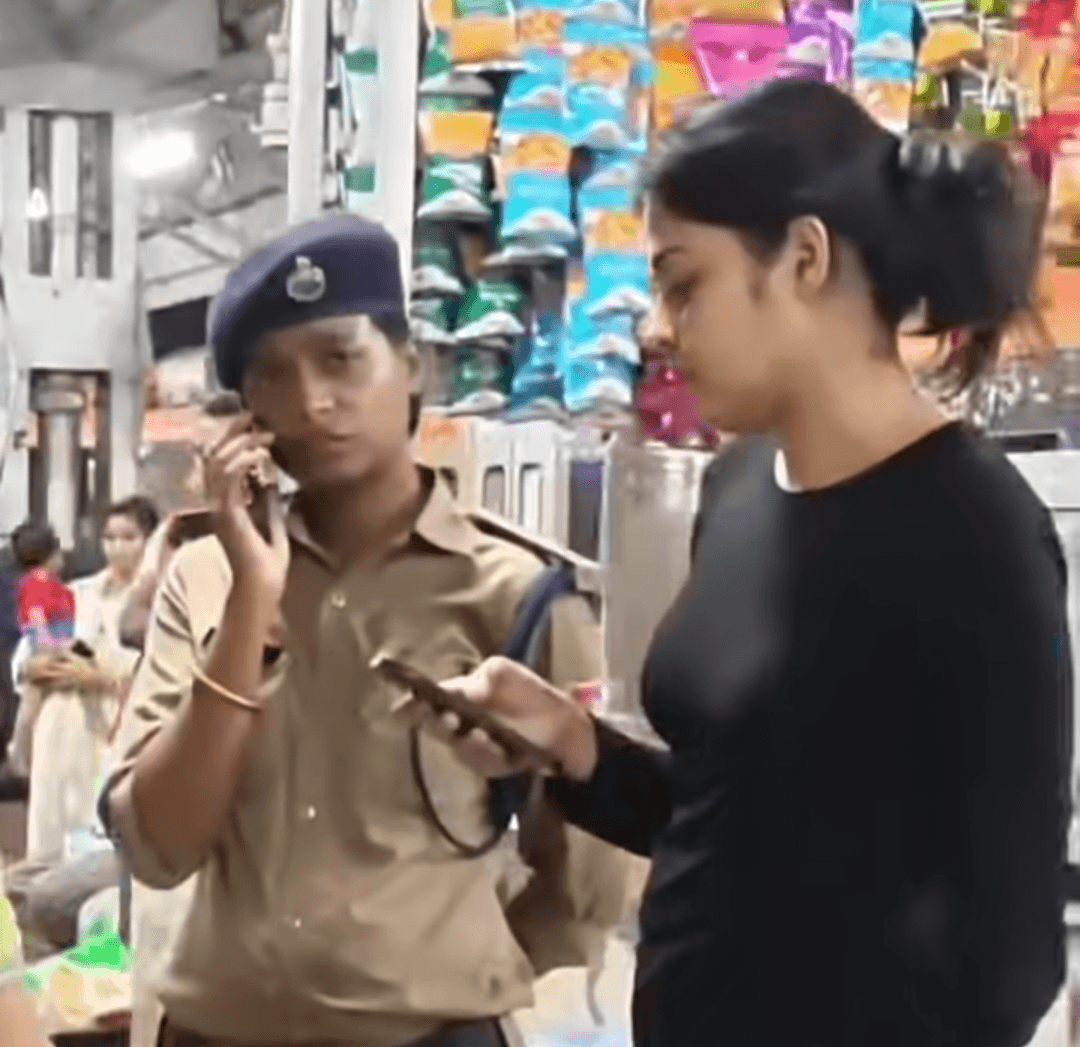
The Swatantrata Senani Express had barely settled onto the platform at Samastipur Junction when a locked door in coach H-1 drew the attention of waiting officers. Inside Coupe Number Seven of the AC First Class carriage, someone had bolted the compartment from within — an unremarkable precaution on a long-distance train, until it isn’t.
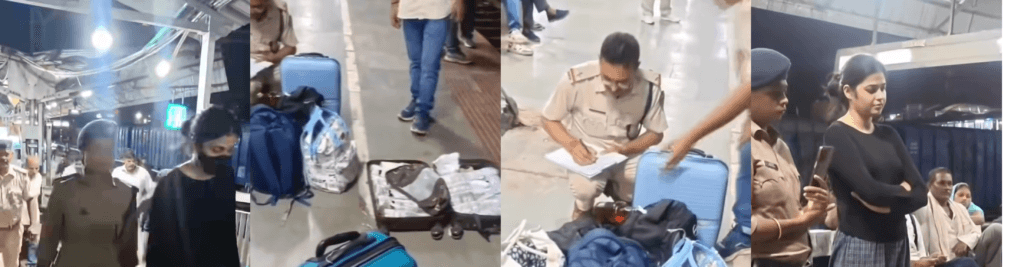
The tip had come in from Varanasi: a woman was travelling on the New Delhi–Jaynagar service with a consignment of liquor. A joint team from the Railway Protection Force, the Government Railway Police, and the Crime Intelligence Bureau was waiting when the train pulled in. When the door finally opened, they found a young woman named Neha Jha, seated with a man she identified as her brother-in-law, Ishan Kumar. Neither, officers said, was carrying a valid ticket.
What officers found next turned a routine ticket check into a full-blown case. Two suitcases and a briefcase, opened on the platform, yielded bottle after bottle of branded liquor — 75 litres in all, smuggled into a state where alcohol has been outlawed since 2016.
The Woman in Coupe Seven: A 25-Year-Old at the Centre of It
Neha Jha, 25, comes from Bari village in Samastipur’s Singhia police station area, and holds a degree from KS College in Darbhanga — a detail that has added an extra note of surprise to a story already drawing outsized attention on social media. According to police, she was ferrying the consignment to Darbhanga, where it was allegedly bound for a specific set of buyers. When first questioned, she reportedly told officers that the berth had been booked in Ishan Kumar’s name, not her own.

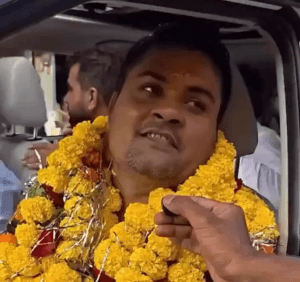
Investigators aren’t yet certain whether the haul was a one-off run or a single shipment in a much larger operation. Among the threads they’re pulling: her phone records, in hopes of tracing who supplied the liquor and who was meant to receive it, and unconfirmed claims that she had been posing as a medical representative — a cover, investigators suspect, that gave her access to doctors and well-off clients in Darbhanga who may have made up part of the customer base.
A Family Already Known to Police
The case took on an added layer once investigators began looking into Neha’s background — and it was her elder sister who drew the first flicker of recognition. Nishu Jha had been arrested by the Darbhanga Excise Department in late November 2025, caught with 21 litres of foreign liquor in what was, at the time, treated as a standalone case. She was jailed for it. Now, with her younger sister facing a far larger seizure less than a year later, investigators are examining whether the two cases are connected at all — whether Nishu’s arrest was an isolated slip, or an early, smaller thread of the same network they now suspect Neha of being part of. No link has been confirmed, but the question is active enough that police have flagged it explicitly as something under review.
Neha is said to be the youngest of four sisters — one works at a diagnostic centre in Darbhanga, another is married to Ishan Kumar, the very man who was with her on the train. Their mother works as an Anganwadi worker, and the sisters, Nishu included, had reportedly been sharing a rented house in Darbhanga, a detail that has fed the theory that whatever operation was underway ran through the household rather than any one individual.
Their father’s story is murkier, and reports diverge on the specifics — his name is given as either Pankaj Kumar Jha or Sanjay Jha in different accounts, though both agree he worked in agriculture and had himself been arrested in a liquor case some time before Neha’s own arrest. Police have been careful to note that none of this family history proves anything about Neha’s involvement in the current case — it simply set the backdrop against which investigators began asking questions.
Prohibition, and the Trade It Created
Bihar’s decade-old ban on alcohol — enforced under the Bihar Excise and Prohibition Act — was meant to curb consumption and the social harm that came with it. What it has also done, consistently, is create a lucrative shadow trade, with liquor smuggled in from neighbouring states through everything from trucks to, evidently, first-class train coupes. Cases like Neha Jha’s have become a familiar rhythm in Bihar’s news cycle: a seizure, a name, a family history, and a promise from investigators to trace the network upstream.
For now, that promise remains open. No charges or court appearance have been reported yet. Police say the priority is establishing where the liquor came from, who it was meant for, and whether the young graduate from Darbhanga was a courier — or something closer to the centre of the operation.
This account is compiled from Indian news reporting published in the days following the arrest. A small number of details, including her father’s name, are reported inconsistently across outlets and could not be independently confirmed.