Cancer Drug Prices from 9 November 2026: Revised MRP List
Share Copy Link copied Prices of hundreds of oncology brands drop from Monday under a 30% trade margin cap, though some of the costliest immunotherapy and targeted drugs show no change on the official list.Thank you for reading this post, don’t forget to subscribe! November 8, 2026|CoreSignal Which Cancer Drug Prices Are Changing? New maximum…
Prices of hundreds of oncology brands drop from Monday under a 30% trade margin cap, though some of the costliest immunotherapy and targeted drugs show no change on the official list.
Thank you for reading this post, don't forget to subscribe!November 8, 2026|CoreSignal
Which Cancer Drug Prices Are Changing?
New maximum retail prices (MRPs) for anti-cancer medicines take effect across India on Monday, 9 November 2026. The National Pharmaceutical Pricing Authority (NPPA) has published product-wise revised rates for hundreds of brands, and pharmacies and hospitals must charge no more than these prices from that date.
How a 30% Margin Cap Turned Into Lower MRPs
The changes follow a government order of 17 October that limited trade margins at 30% for 137 non-scheduled anti-cancer drugs under Paragraph 19 of the Drugs (Prices Control) Order, 2013. The exercise extends a 2019 pilot that covered 42 cancer drugs.
The formula works from the price a company charged stockists, not from the price on the shelf today. NPPA’s own illustration: a drug sold to stockists at ₹70 can carry a maximum MRP of ₹100 plus GST, so a pack currently retailing at ₹300 plus GST would fall by ₹200. Brands already priced below their computed ceiling keep their existing MRP.
Revised MRPs Published by NPPA
On 28 October, the Ministry of Chemicals and Fertilizers said NPPA had released a list of 543 brands of anti-cancer medicines with their revised Maximum Retail Price, based on company submissions received up to 27 October. A later compilation reflecting submissions up to 28 October runs to 643 entries. Those figures count products across brands, strengths and pack sizes, so they are not 643 separate drugs. newsonair
Some of the published changes:
| Brand (company) | Drug / pack | Old MRP | Revised MRP |
|---|---|---|---|
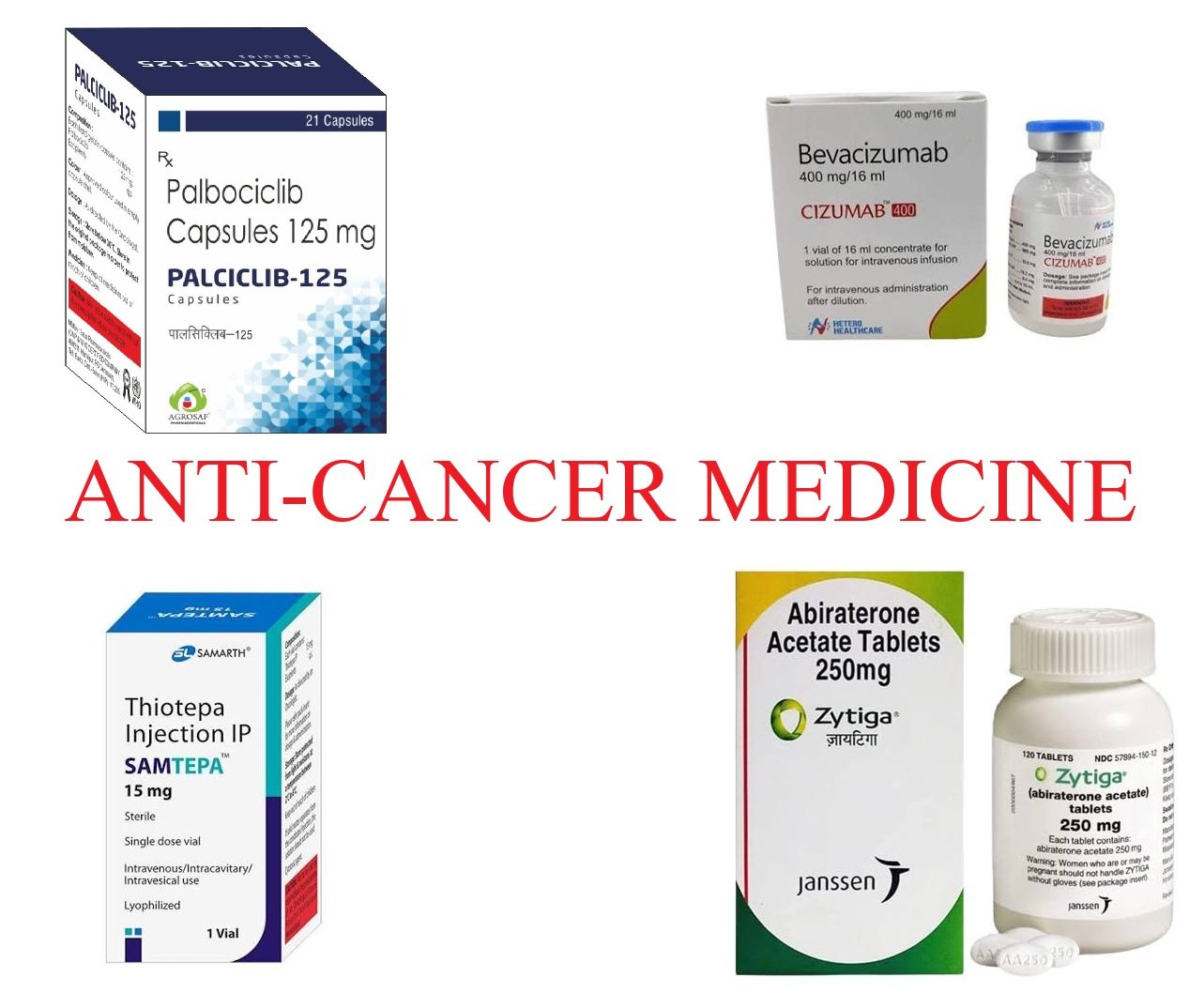
| Palbopro (RPG Life Sciences) | Palbociclib 125 mg, 21 capsules | ₹40,421.33 | ₹2,720 |
| Samtepa (Samarth Life Sciences) | 100 mg injection, vial | ₹80,071.86 | ₹7,150.33 |
| Bevacizab (Abbott) | Bevacizumab, 16 ml (400 mg) vial | ₹65,205.09 | ₹8,956.75 |
| Abirapro (Glenmark) | Abiraterone 250 mg, 120 tablets | ₹28,744 | ₹5,768 |
| Fulbreca (RPG Life Sciences) | 5 ml vial | ₹26,072.16 | ₹5,491 |
| Debrumab (RPG Life Sciences) | Denosumab 60 mg, 1 ml PFS | ₹22,031.25 | ₹5,941 |
| Bevacizab (Abbott) | Bevacizumab, 4 ml vial | ₹21,767.70 | ₹5,930.13 |
| Azacytin (Dr Reddy’s) | Azacitidine, single vial | ₹6,337 | ₹1,495.04 |
| Dasanat 20 (Natco) | Dasatinib 20 mg, 60 tablets | ₹2,812.50 | ₹1,085.93 |
| Anarzole (RPG Life Sciences) | Anastrozole 1 mg, 10 tablets | ₹695.76 | ₹73 |
Several of these cuts exceed the “up to 70%” figure the government first projected. Palbopro’s reduction works out to roughly 93%, and the Anarzole pack to nearly 90%, according to the company-reported entries compiled by Medical Dialogues.
The Costly Drugs Where the List Shows No Cut
The same published entries show that inclusion in the exercise does not guarantee a lower price. MSD’s Keytruda 100 mg injection stays at ₹2,16,500, AstraZeneca’s Tagrisso 80 mg (30 tablets) at ₹4,16,492.48, and Imfinzi 500 mg/10 ml at ₹1,71,324.27. Pembrolizumab, osimertinib and durvalumab had been highlighted when the affordability push was announced.
K M Gopakumar of the Working Group on Access to Medicines and Treatments has argued that trade margin regulation alone has not made such life-saving drugs affordable. A cap on distributor and retailer markups can only trim the part of the price that sits in the supply chain, which leaves little room to move on a medicine whose manufacturer price is already high.
What Patients and Hospitals Must Do From Monday
Pharmacies, hospitals and other medical institutions must charge no more than the revised MRPs and display the updated prices prominently. Hospitals must also publish them on their websites, and State Drug Controllers are responsible for monitoring compliance.
Patients can check a brand’s ceiling on NPPA’s website or the Pharma Sahi Daam app before paying. The published MRP is a ceiling rather than a guaranteed bill: where a chemist was already selling below MRP, the saving may be smaller than the percentage on paper.
A List That Is Still Being Filled In
NPPA has said the revised list will be updated as more manufacturers submit prices for non-scheduled anti-cancer drugs. The jump from 543 to 643 entries within a day shows how quickly it is changing, so a brand missing from the current list may appear in a later update. Patients on long-running treatment can ask the pharmacy to bill against the latest NPPA entry for their exact brand, strength and pack size.