India Would Be Richer and More Democratic Without Modi? Here’s What a New Study Says
Thank you for reading this post, don't forget to subscribe!September 1, 2026|CoreSignal
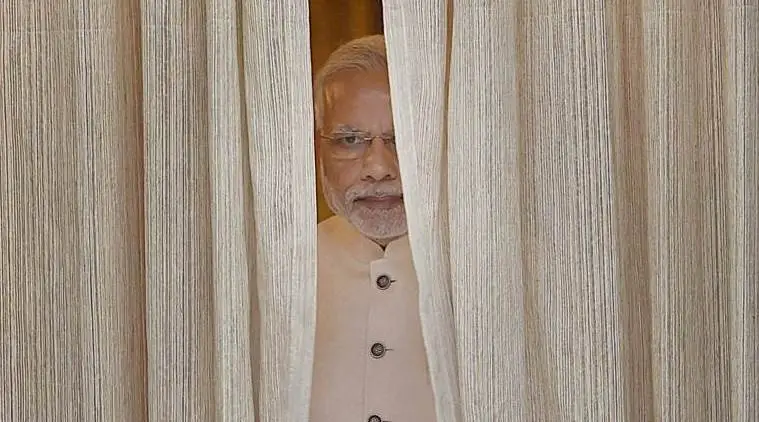
A new academic study out of the United States has reignited debate over India’s trajectory since 2014, concluding that the country would have been wealthier, less corrupt, and more democratic had Narendra Modi never become prime minister.
The Study That Claims India Would Be Richer Today Had Modi Never Become PM
The paper, titled “Promises, Promises: Governance and Growth in India under Modi and the BJP,” was co-authored by Kevin Grier of Texas Tech University’s Department of Political Science and Robin Grier of the university’s Department of Agricultural and Applied Economics.
Rather than simply describing what happened in India after 2014, the researchers built a statistical “synthetic control” — a counterfactual India constructed from the trajectories of comparable countries — to estimate what might have happened had the country continued along its pre-2014 path instead of adopting what the authors call the “Gujarat model” associated with Modi’s governance style.
Key Findings
On the economy: The study estimates that India’s real per-capita income in 2023 would have been roughly $1,000 higher had the country stayed on its earlier trajectory. The authors translate this into a tangible figure — about ₹27,000 more per month for a family of four.
On governance and democracy: The researchers also tracked a range of institutional indicators, including:
- Political corruption
- Democracy (polyarchy)
- Liberal democracy
- Freedom of expression
- Freedom of religion
- Freedom of association
- Equality before the law
Across the 2014–2023 decade, the study found notable deterioration relative to the counterfactual, with roughly half of the indicators showing a decline of more than 45%.

How This Fits the Broader Picture
The findings arrive alongside other recent assessments of India’s democratic trajectory. The BTI 2026 India Country Report, for instance, also describes continued democratic backsliding during this period, while noting that India retains a strong historical record as an established democracy with high voter participation even among poor and less-literate populations. That report notes Modi remains highly popular, having begun a third term in June 2024 despite the BJP losing its outright parliamentary majority.
Context and Caveats
A few things are worth keeping in mind when weighing this study:
- Methodology matters. Synthetic control methods estimate a hypothetical scenario by comparing a country to a weighted blend of others. Results can be sensitive to which comparison countries and time periods are chosen, so the robustness of the modeling is as important as the topline numbers.
- Publication status. Coverage of the study has appeared in outlets such as The Wire and Madhyama, but it’s worth checking whether the paper has been peer-reviewed or is still a working paper, as that affects how much weight to give the specific figures.
- Political echo. Indian commentators have pointed out that the study’s conclusions closely mirror arguments long made by the BJP’s political opposition — which doesn’t invalidate the findings, but is useful context for readers.
- Contested territory. Modi’s supporters and government have pointed to strong GDP growth, infrastructure expansion, and reduced extreme poverty during his tenure as counterevidence to narratives of economic decline, making this an actively disputed area rather than a settled one.
The Bottom Line
The study adds an empirical, counterfactual-modeling voice to an already polarized debate about Modi’s economic and democratic legacy. Whether one finds it persuasive likely depends on how much confidence one places in synthetic control methodology for a case as large and complex as India — but it’s a notable addition to a body of research increasingly scrutinizing the gap between India’s official growth narrative and independent measures of democratic health.
Disclaimer:
This article summarizes the findings and claims of a specific academic study and does not constitute an endorsement of those findings by the publisher or author. Synthetic control and counterfactual modeling involve inherent assumptions and estimation uncertainty, and other researchers, government bodies, and commentators have reached different conclusions about India’s economic and democratic trajectory over this period. Readers are encouraged to consult the original paper and multiple sources before drawing conclusions. This piece is intended for informational purposes only and should not be taken as a definitive statement of fact on a politically contested subject.