Oskar Klein Medal: Kolkata-Born Ashoke Sen Becomes First Indian Recipient
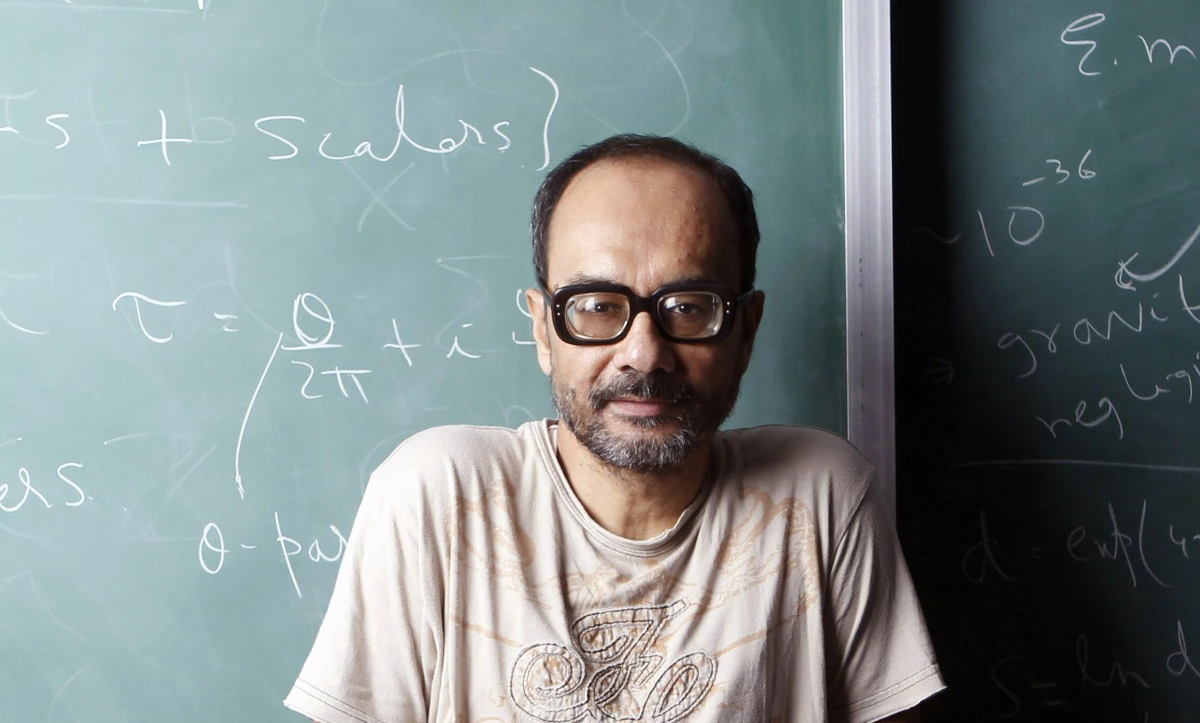
The Kolkata-born string theorist, now at ICTS Bengaluru, joins a medal roll that includes Stephen Hawking and Peter Higgs
Thank you for reading this post, don't forget to subscribe!October 26, 2026|CoreSignal
Thirty-eight years after its founding, the Oskar Klein Medal has gone to an Indian for the first time. Professor Ashoke Sen, born in Kolkata in 1956 and now based in Bengaluru, is the 2026 recipient. Deccan Herald reported on 22 October that he joins a list of past winners that includes Hawking and Higgs. Rajesh Gopakumar, director of the International Centre for Theoretical Sciences (ICTS), where Sen is a professor, said the honour matches the standing Sen already holds among physicists across the world.
For West Bengal, the news carries a particular warmth. The path from a Kolkata classroom to a Stockholm lecture hall was built almost entirely through Indian institutions.
Growing Up in a Physics Teacher’s Home
Ashoke Sen was born on 15 July 1956, the elder son of Anil Kumar Sen, a physics professor at Scottish Church College, and Gouri Sen, a homemaker. Physics was part of the household long before it became a career, though Sen has said in interviews that wanting to be a scientist as a child did not come with any clear idea of what science actually meant. That understanding came gradually, through college and then IIT.
His schooling was at Sailendra Sircar Vidyalaya, a school near the family home that he has described fondly. In a conversation with the Bhavana magazine, he recalled that practical physics was taken seriously even at school level, and that lab sessions sometimes began between 6 and 7 in the morning because the physics teacher was a college lecturer who taught part-time. Several classmates from those years went on to research careers in physics themselves.
From Presidency College to Stony Brook
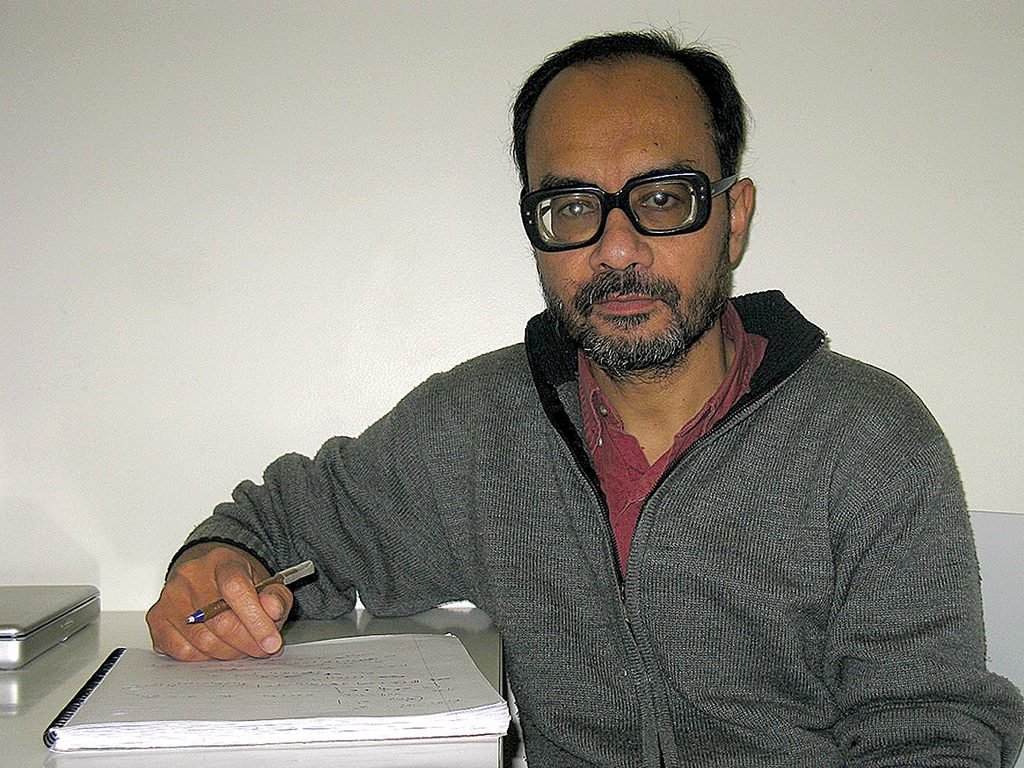
Sen took his BSc in 1975 from Presidency College, then part of the University of Calcutta. Among his teachers there, the work and lectures of Amal Kumar Raychaudhuri, the Kolkata physicist famous for the Raychaudhuri equation in general relativity, left a strong impression on him. His master’s followed at IIT Kanpur, and the doctorate at Stony Brook University in the United States, with George Sterman listed as his advisor. Postdoctoral stints at Fermilab and the Stanford Linear Accelerator Center came next.
Offers to stay abroad were there, but Sen came back. His Indian career has run through the Tata Institute of Fundamental Research in Mumbai, the Harish-Chandra Research Institute in Prayagraj, and now ICTS in Bengaluru, where he holds the ICTS-Infosys Madhava Chair. He also holds visiting positions at MIT and the Korea Institute for Advanced Study. His wife, Sumathi Rao, is also a physicist.
What the Oskar Klein Medal Recognises
The medal was instituted in 1988 in memory of Oskar Klein, the Swedish physicist who, with Theodor Kaluza, helped shape Kaluza–Klein theory. That theory proposed a compact extra dimension as a way to unify gravity with electromagnetism, an idea that string theory later absorbed and extended. Each year’s recipient is invited to Stockholm to deliver the Oskar Klein Memorial Lecture, backed by Stockholm University and the Nobel Committee for Physics of the Royal Swedish Academy of Sciences.
Sen delivered the 2026 lecture on 22 October at the university’s AlbaNova Centre. Its title, “Gravity from Strings and Strings from Gravity,” sums up a question that has occupied him for decades: how a quantum description of gravity can arise from the physics of tiny vibrating strings, and how string theory itself depends on gravity. Given that Klein’s own ideas pointed toward unification through hidden dimensions, the pairing of medal and recipient is a natural one.
S-Duality, Tachyons and Black Holes: The Research Behind the Name
Sen’s reputation rests on a series of results that changed the direction of string theory.
- S-duality. His 1994 work on strong-weak coupling duality showed how a theory at strong coupling can be equivalent to a different description at weak coupling. The paper was influential in reshaping research in the field and fed into what is often called the second superstring revolution.
- Unstable D-branes and the Sen conjecture. In 1998, he proposed what is now called the Sen conjecture, concerning how open-string tachyon condensation behaves on unstable D-branes. His later description of “rolling tachyons” influenced work on string cosmology.
- Black hole physics. He developed the entropy function formalism for extremal black holes, with applications to the attractor mechanism, and contributed to the precise counting of black hole microstates.
- String field theory and perturbation theory. He co-authored important papers on string field theory and, more recently, has worked on new developments in superstring perturbation theory.
The citation for his 2012 Breakthrough Prize in Fundamental Physics pointed to his role in revealing that the various string theories are different limits of one underlying theory.
How the Oskar Klein Medal Joins a Long List of Honours
The Stockholm recognition comes after decades of awards at home and abroad:
- ICTP Prize (1989)
- Fellow of the Indian Academy of Sciences (1991)
- Shanti Swarup Bhatnagar Prize (1994)
- G.D. Birla Award for Scientific Research (1996) and Fellow of the Indian National Science Academy (1996)
- TWAS Prize (1997)
- Fellow of the Royal Society (1998), reportedly on a nomination by Stephen Hawking
- Padma Shri (2001)
- Infosys Prize in Mathematical Sciences (2009), and an honorary Doctor of Science from IIT Kharagpur (2009)
- Fundamental Physics Prize, now known as the Breakthrough Prize in Fundamental Physics (2012), among its first recipients
- Padma Bhushan (2013) and M.P. Birla Memorial Award (2013)
- ICTP Dirac Medal (2014)
A Kolkata Story with a Global Ending
Bengal’s scientific tradition runs through Jagadish Chandra Bose, Satyendra Nath Bose and Meghnad Saha, and Sen’s career extends it into the era of quantum gravity. His work is among the most abstract in modern physics, addressing the quantum nature of space, time and black holes, with no immediate commercial use. That makes the message to students plain: curiosity-driven research, pursued patiently and largely from Indian institutions, can earn a place at the top table of world science.