Confused about the Census 2027 West Bengal Form? Here’s what it asks, what information you need to provide, whether documents are required, and how it differs from the SIR voter form.
Thank you for reading this post, don't forget to subscribe!August 23, 2026|CoreSignal
Synopsis: Census 2027 West Bengal Form
If you’ve heard about the Census 2027 West Bengal Form (known as West Bengal Census Self-Enumeration Form) and aren’t sure whether you need to fill it, what it actually asks, or how it’s different from other forms floating around this year — the SIR voter form, ration card renewals, and so on — this breaks down exactly what the Census form is and what information it collects.
What is the Census 2026/ Census 2027 Form?
This is the household questionnaire used for the House Listing and Housing Census, the first phase of India’s 16th Census (Census 2027) — and its first ever fully digital one. The exercise is being conducted in two phases: House Listing and Housing Census, which began April 1, 2026, followed by Population Enumeration scheduled for February 2027. You’ll see it referred to as both “Census 2026” and “Census 2027” — 2026 refers to when this first phase is happening, while 2027 is the year the full exercise, including Population Enumeration, wraps up.
The Census uses the secure HLO (House Listing Operations) mobile application to collect responses from households, alongside a web-based platform called the Census Management and Monitoring System (CMMS) Portal. In West Bengal specifically, residents got an added option this year: filling in their details online themselves before an enumerator ever shows up at the door.
A quick look back: Census 2011
The last full Census of India was conducted in 2011, in two phases — the first from April 1 to 10, and the second from April 20 to 28 — with the objective of enumerating everyone residing in India as of the night of March 31, 2011. West Bengal’s population stood at approximately 9.13 crore in that Census, up from 8.02 crore in 2001, a decadal growth rate of 13.84%. The state’s literacy rate was recorded at 76.26%, with a sex ratio of 950 females per 1,000 males — both above the national averages at the time. The Census originally due in 2021 was postponed, largely due to the COVID-19 pandemic, which is why the current exercise — technically the 16th Census — is only now getting underway, 15 years after the last full count
Two versions of the form: Self-Enumeration and House Listing
It helps to think of this as two related but distinct steps, not one single form:
1. The Self-Enumeration Form — West Bengal’s online self-enumeration window ran from August 1 to August 15, 2026, through the official portal se.census.gov.in. The portal is available in 16 languages for household-level data entry. This step was entirely voluntary — nobody was required to use it — but completing it in advance made the in-person visit shorter.
2. The House Listing Form — This is what enumerators collect in person during House Listing Operations Phase-I, conducted throughout the state from August 16 to September 14, 2026, covering housing conditions, household amenities, assets, family particulars, and economic activities through a structured questionnaire of 33 notified questions. Every household gets this step, whether or not they self-enumerated. If you already have a Self-Enumeration ID, the enumerator simply verifies it rather than asking every question again from scratch.
What information does the form ask for?
The form covers your household as a whole — one person fills it in on behalf of everyone living there — and is organized around a few broad areas:
Housing structure
The predominant material used for the roof, walls, and floor (concrete, brick, mud, thatch, etc.), and the ownership status of the house — owned, rented, or otherwise. Questions also cover the number of rooms, drinking water source, toilet facilities, and main source of energy used in the house.
Household members
You’ll need the exact names and ages of everyone residing in the household, entered as part of the questionnaire. The form also captures education level and occupation for household members, along with the household’s address.
Assets and amenities
Beyond the structural details, the form asks about household assets — items owned by the family, which the Census uses as one of several indicators of living standards.
Altogether, completing the online questionnaire — covering household, family members, education, occupation, address, housing conditions, and basic amenities — usually takes 10 to 15 minutes. Some accounts of the process report it taking closer to 15 to 20 minutes, so it’s worth setting aside a bit more time than you might expect, especially if your household has several members.
Census 2027 Manipur
Manipur’s Census Self-Enumeration window is currently open, running from August 17 to August 31, 2026, according to the official State & UT-wise schedule published by the Registrar General & Census Commissioner of India. This will be followed by the in-person House Listing and Housing Census phase, when enumerators visit households directly, from September 1 to September 30, 2026.
The process for Manipur residents is identical to what’s outlined above for the rest of the country: log in at se.census.gov.in, select Manipur from the state list, verify your mobile number via OTP, and work through the same 33-question form covering housing structure, household members, and assets. Once submitted, you’ll receive your 11-digit SE ID — keep this ready to share with the enumerator who visits during the September window, so your submitted details can be verified rather than re-collected from scratch.
As with every other state, participation is voluntary. If you don’t complete self-enumeration by August 31, an enumerator will simply collect the same information in person when they visit in September.
What you need before starting the form
Have an active, registered mobile phone number ready, along with the exact names and ages of everyone in the household, and basic information about your home’s structure — roof and wall materials, water supply, and similar details.
One thing worth clarifying upfront, since it’s a common point of confusion: the Census is a statistical exercise, not a citizenship or identity-document verification process, and the government has clarified that no document is required to participate. Identity documents like Aadhaar or Voter ID are not mandatory — you don’t need to upload scanned copies or enter document numbers anywhere on the form. Your mobile number is what matters, since it’s required for OTP-based login and for receiving your SE ID via SMS.
How the online form works, step by step
On the portal’s landing page, select West Bengal from the state list, then choose your preferred language — the portal supports English, Bengali, Hindi, and several other regional languages. From there:
- Enter the full legal name of the head of the household and their active mobile number, complete the CAPTCHA, and click “Request OTP.”
- You’ll receive a 6-digit One-Time Password via SMS — enter it on the verification screen within 2 minutes.
- The form is divided into sections covering household details, housing amenities, and assets — work through each section, answering as accurately as you can.
- You can save your progress partway through and log back in later using your mobile number if you need a break.
- Once you’ve completed the housing structure and asset questions, submit the form. The system will then display a success screen showing your unique 11-digit Self-Enumeration ID (SE ID).
- Save a screenshot of this ID or write it down — it’s the official proof that your household has completed the online form.
What happens with your SE ID afterward
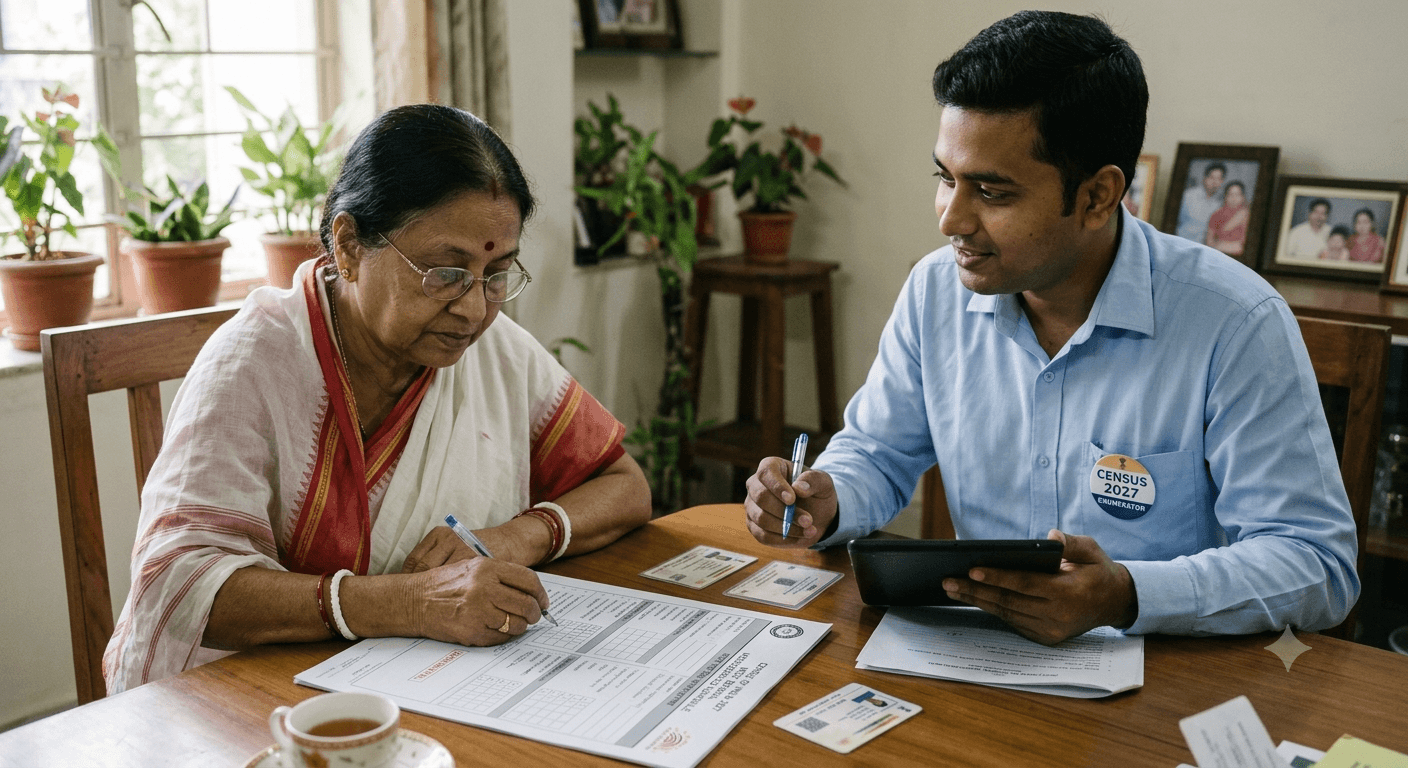
During the house-listing phase, a local census enumerator will visit your home. When they arrive, simply share your 11-digit Self Enumeration ID (shortly SE ID) — the enumerator will enter it into their hand-held tablet device to verify and pull your pre-filled records, which means you won’t have to answer the same questionnaire twice.
What the Census form is not
Since several household-level exercises have overlapped in West Bengal this year, it’s worth being explicit about what this form is not:
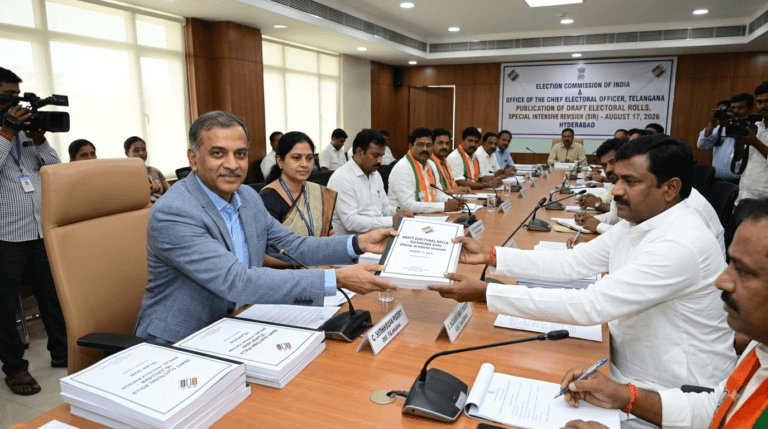
- It’s not the SIR voter enumeration form. Self-Enumeration for the Census is entirely separate from the Special Intensive Revision (SIR) voter enumeration form — the Census Self Enumeration Form deals only with Census-related household and housing information, not electoral rolls.
- It’s not a document-verification exercise. No Aadhaar, Voter ID, ration card, or other document is required to complete it, and none of that information gets uploaded through this process.
- It’s not mandatory to complete online. Self-enumeration is voluntary — anyone who doesn’t complete it online will simply have the full questionnaire filled in by an enumerator in person during the house-listing visit. Coresignal
Frequently Asked Questions
In short: the Census 2026/2027 West Bengal form is a 33-question household questionnaire covering your housing structure, family members, education, occupation, and household assets — collected either through voluntary online self-enumeration (August 1–15) or in person during the house-listing visit (August 16–September 14). No identity documents are needed, and it has nothing to do with the SIR voter rolls process running separately.
Sources:
- Press Information Bureau, Government of India
- Office of the Registrar General & Census Commissioner, India
- Directorate of Census Operations, West Bengal