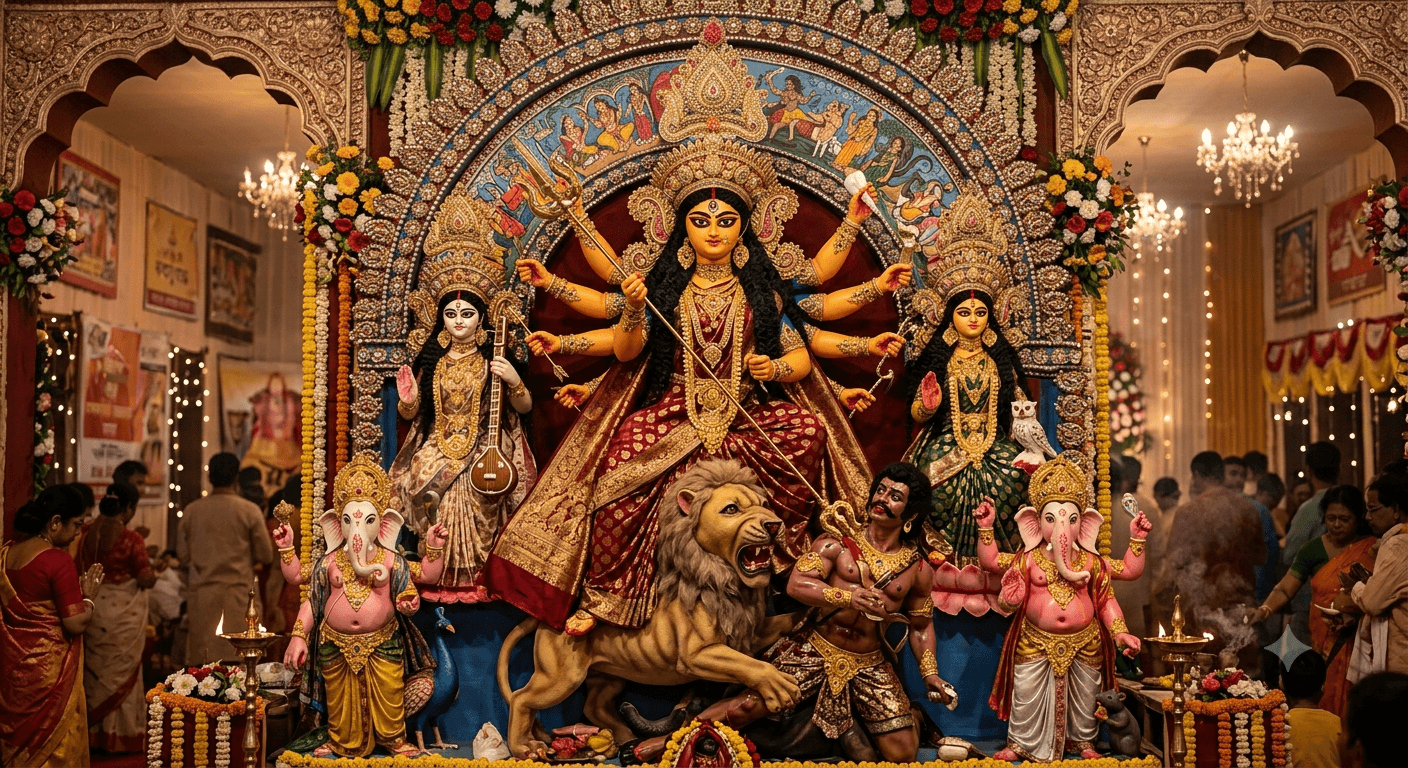
From Mahalaya’s tithi to the final immersion on Vijaya Dashami — here’s the complete day-by-day Durga Puja 2026 calendar, with rituals, holidays, and what to expect on each date.
Thank you for reading this post, don't forget to subscribe!September 11, 2026|CoreSignal
Durga Puja 2026 runs from Mahalaya on October 10 through Vijaya Dashami on October 21, with the five main days of public celebration — Shashthi to Dashami — falling between October 16 and 21. Here’s the full day-by-day breakdown, plus what each day actually means if you’re planning pandal-hopping, travel, or time off work.
Durga Puja 2026 at a glance
| Day | Date | Day of Week |
|---|---|---|
| Mahalaya | October 10, 2026 | Saturday |
| Maha Shashthi | October 16, 2026 | Friday |
| Maha Saptami | October 17, 2026 | Saturday |
| Maha Ashtami | October 19, 2026 | Monday |
| Maha Navami | October 20, 2026 | Tuesday |
| Vijaya Dashami | October 21, 2026 | Wednesday |
A quick note on accuracy: because Durga Puja dates are set by lunar tithis rather than a fixed calendar, occasionally a tithi is skipped or stretched across two sunrises. This means some regional panchangs list Ashtami, Navami and Dashami a day earlier or place two rituals on the same day. The dates above reflect the most widely followed Drik Panchang calculation for West Bengal — it’s worth double-checking with your local purohit or club’s panjika closer to the date if you’re timing a specific ritual.
What each day means
Mahalaya (October 10) marks the end of Pitru Paksha and the start of Devi Paksha — the fortnight during which Goddess Durga is believed to descend to Earth. It’s traditionally observed with early-morning Chandipath recitations on the radio, though it isn’t itself a public celebration day; idol-making and pandal decoration ramp up in the week that follows.
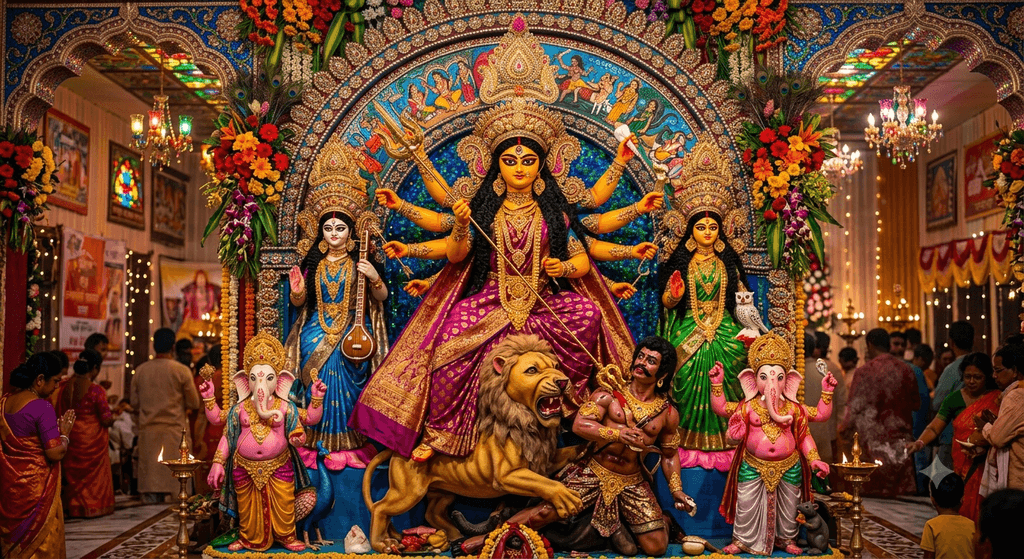
Maha Shashthi (October 16) is the formal start of the public festival. The Bodhon ritual ceremonially awakens the Goddess, and the idol’s face — kept covered until now — is unveiled. This is when pandals see their first real crowds of the season.
Maha Saptami (October 17) opens full worship with the Nabapatrika Snan — the ritual bathing of nine plants bundled and dressed like a bride, popularly called Kola Bou, placed beside the Ganesha idol.
Maha Ashtami (October 19) is widely considered the holiest day of the festival. Devotees offer Pushpanjali (flowers with mantras), often on an empty stomach, and many pandals hold Kumari Puja, worshipping a young girl as a living form of the Goddess — most famously at Belur Math. The Sandhi Puja, performed at the exact junction of Ashtami and Navami tithis, is considered one of the most powerful moments of the entire festival.
Maha Navami (October 20) continues the worship with cultural performances, dhunuchi dance, and family gatherings, closing out the main ritual days before immersion.
Vijaya Dashami (October 21) brings the festival to a close. Married women take part in Sindoor Khela, smearing vermillion on each other and the idol as a gesture of sisterhood and good fortune, before idols are carried through the streets for visarjan (immersion) in the Hooghly and other water bodies across the state.
Planning around the dates
- Holidays: West Bengal observes an extended holiday through the main five days, and Vijaya Dashami is a gazetted holiday across most of India — including a trading holiday on the NSE and BSE.
- Best time to visit pandals: Shashthi and Saptami mornings are the calmest window to see pandal art without crowds; Ashtami and Navami nights bring the festival’s biggest crowds and energy.
- Travel: if you’re heading to Kolkata for the festival, plan to arrive by Shashthi and stay through Dashami for the full arc — from the Bodhon unveiling to the immersion processions.
How this compares to Navratri
Durga Puja and Navratri fall in the same nine-night autumn window and both end on Vijaya Dashami, but the celebration looks very different depending on where you are. Durga Puja, centred in Bengal and eastern India, revolves around elaborate pandals, artistic idols and cultural programming, while Navratri in Gujarat and North India centres on fasting, Garba and Dandiya.
FAQs
Is Durga Puja 2026 five days or more?
The core public festival runs five days, from Shashthi to Vijaya Dashami (October 16–21), though preparations and Mahalaya observances begin nearly a week earlier.
What is the most important day of Durga Puja?
Maha Ashtami (October 19, 2026) is generally regarded as the most spiritually significant day, particularly the Sandhi Puja performed at the Ashtami–Navami junction.
Is Vijaya Dashami a public holiday in 2026?
Yes — Vijaya Dashami (October 21, 2026) is a gazetted holiday across most of India, with markets including the NSE and BSE also closed for trading.
Why do some calendars show different Durga Puja dates?
Durga Puja dates follow lunar tithis, not the fixed solar calendar, so a tithi can occasionally span two sunrises or get skipped. This is why some panchangs shift Shashthi, Ashtami or Navami by a day — always check your local panjika near the date for ritual-specific timing.