
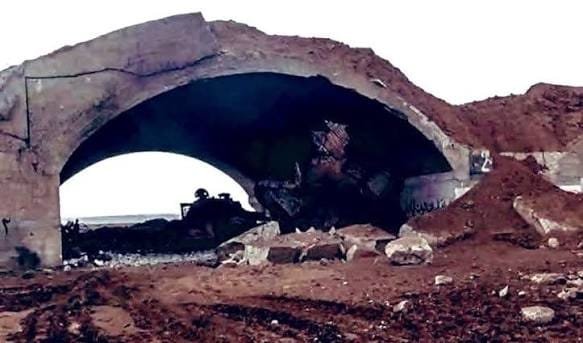
No casualties reported as Israel says the strike was aimed at stopping Turkish troops from deploying at the Idlib airbase — drawing a rare rebuke from the US
Thank you for reading this post, don't forget to subscribe!August 25, 2026|CoreSignal
Israel carried out eight airstrikes on the Abu al-Duhur airbase in northwestern Syria in the early hours of August 18, 2026, targeting the runway and storage facilities at the site. The strikes marked one of the sharpest escalations yet in the deteriorating relationship between Israel and Turkey — drawing condemnation from Ankara and an unusually pointed rebuke from Washington.
What happened at Abu al-Duhur
Syria’s state-run broadcaster Ekhbariya, citing a military source, reported that Israel carried out eight airstrikes on the runway and storage facilities at the Abu al-Duhur base, located near Aleppo in Idlib province, roughly 70 km from the Turkish border. A separate military source and a civilian living near the base confirmed there were no casualties. The Israeli military declined to comment on the strikes, and Syria’s defense ministry did not respond to requests for comment.
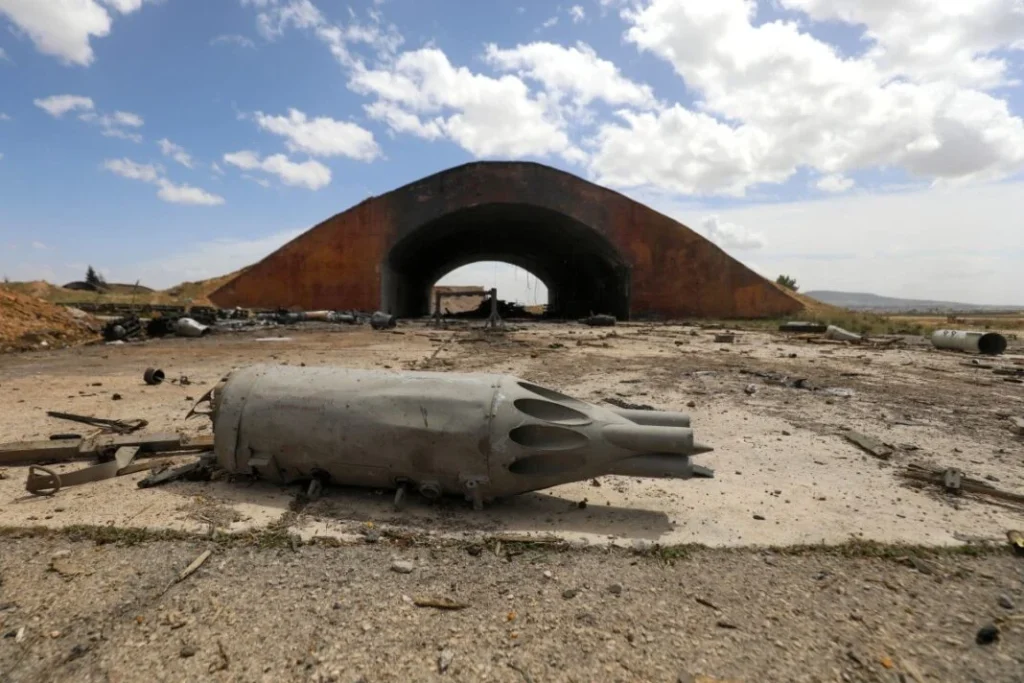
The base itself has a complicated recent history — it had been out of service as a dedicated military airfield since 2013 and changed hands multiple times during Syria’s 14-year civil war. Since former president Bashar al-Assad was ousted in late 2024, the base had been repurposed as a training centre for Syria’s new army.
Why Israel struck the base
After a day of official silence, Israeli Prime Minister Benjamin Netanyahu’s office confirmed late that evening that the strikes were aimed at stopping Turkish troops from deploying at the airbase. According to Israel’s statement, Israel and Syria had “agreed to a status quo in security matters,” but Damascus was “on the verge of breaching” that understanding by allowing Turkish forces to deploy there. Israel said it had “repeatedly warned Syria” of the risk, but that “Syria chose to ignore these warnings.”
The Syrian Observatory for Human Rights, a UK-based war monitor, said Turkey — a main backer of Syria’s post-Assad government — had been actively rehabilitating the airfield, which had sat unused for years during the civil war.
The reaction from Turkey and Syria
Turkish Foreign Minister Hakan Fidan had already warned days earlier, on August 6, that Israel continued to threaten Syria’s security through repeated attacks, calling for international pressure on Israel to respect Syria’s territorial integrity. Turkiye rejected Israeli claims that its potential troop deployment posed any threat justifying the strike.
Syrian Foreign Minister Assad al-Shibani called for the attacks to stop, arguing that Israel needed to recalculate its position toward Syria, since it was confronting not just Damascus but Syria’s allies as well.
This wasn’t an isolated incident — Israel has launched hundreds of attacks on Syria since Assad’s fall in December 2024, and after ousting Assad’s forces, Israel had already seized territory in southwest Syria and struck much of the Syrian army’s heavy weapons stockpiles. But the Abu al-Duhur strike was reportedly Israel’s first attack specifically on Syrian government assets since March, making it a notable escalation rather than business as usual.
A rare rebuke from Washington
What made this particular strike stand out wasn’t the retaliation from an adversary — it was the criticism from an ally. Tom Barrack, the US ambassador to Turkey and special envoy for Syria and Iraq, posted on X that Washington was “deeply concerned that the confirmed Israeli airstrikes on Abu al-Duhur Airbase constitute an unnecessary escalation that does not advance regional stability.” He added that Washington continued to believe “restraint and engagement offer the more constructive course,” urging “all parties to prioritise logical discourse over further military incidents.”
Barrack also noted that Syria’s interim president, Ahmad al-Sharaa, had neither adopted a predatory posture nor maintained proxy forces, and had repeatedly signaled a preference for de-escalation — a notably sympathetic characterization of Damascus coming from a senior US official, at a moment when Israel was actively striking Syrian territory.
The bigger picture: rising Israel-Turkey tension over Syria
This strike didn’t happen in isolation — it’s part of a broader pattern of escalating friction between Israel and Turkey playing out specifically over Syria’s future. Israeli Defence Minister Israel Katz has issued direct warnings to Turkish President Tayyip Erdoğan, saying Israel would not allow steps that strengthened Syria’s military capabilities in ways that could threaten Israel. Adding to the tension, Syria conducted air exercises in the north of the country in early August using Russian-made MiG-21 fighter jets — its first such exercises since Assad’s ouster — and Israel’s Kan public broadcaster reported on August 11 that Israeli security officials had detected signs Syria was accelerating efforts to rebuild its air force, including recruiting new pilots and conducting flight training.
Turkey, which has NATO’s second-largest army and recently signed a mutual defence pact with Pakistan and Saudi Arabia, has increasingly positioned itself as Syria’s primary military backer — setting up a direct and growing rivalry with Israel over who shapes Syria’s post-war security landscape. US-mediated talks between Israel and Syria have continued for more than a year without a deal, and for now, the crater left at Abu al-Duhur stands as one more point of friction between them.
Is this part of an Israel-Turkey war?
No — despite the severity of the escalation, this remains a proxy-style confrontation playing out through Syria, not direct conflict between Israeli and Turkish forces. Analysts have described the broader Israel-Turkey relationship as an emerging “cold war” rather than an active military conflict between the two states, with both sides continuing to compete for regional influence without engaging each other directly. The Abu al-Duhur strike is best understood as a flashpoint within that wider rivalry, rather than the opening move of a war between the two countries.
In short: Israel struck the Abu al-Duhur airbase in Idlib province with eight airstrikes on August 18, 2026, aiming to prevent Turkish troops from deploying there. The attack caused no casualties but triggered sharp condemnation from Turkey and Syria, and an unusually direct rebuke from the United States — underscoring how central Syria has become to the deepening rivalry between Israel and Turkey, even as the two countries stop short of direct war.